
Health Conditions That Can Increase Your Risk for Cavities
Quick answer: Certain health conditions (and the medications used to treat them) can increase cavity risk—often by reducing saliva, increasing inflammation, or making daily hygiene more difficult. If you feel like you’re “always getting cavities,” a personalized plan from a dentist Greenville NC patients trust can make a big difference.
Cavities don’t come from “weak teeth” alone. Most decay happens when plaque bacteria have the right environment to thrive—frequent sugar exposure, low saliva, or enamel that’s repeatedly exposed to acids. Some medical conditions shift the odds in that direction, even if you’re brushing regularly.
Below are the most common health-related risk factors we see at Pruitt & Earp Dentistry, plus practical ways to reduce your risk.
Why health conditions can affect your teeth
Your mouth is part of your body, so overall health can strongly influence oral health. Cavities become more likely when:
- Saliva decreases (saliva protects teeth by neutralizing acids and washing away food particles)
- Diet patterns change (more frequent snacking, sugary drinks, or “comfort foods”)
- Inflammation increases (gum irritation and plaque buildup can worsen)
- Home care becomes harder (fatigue, pain, or limited dexterity makes brushing/flossing more difficult)
If you want a deeper overview of how cavities form, read:
Understanding cavities: causes and prevention.
Top health conditions linked with higher cavity risk
1) Dry mouth (xerostomia)
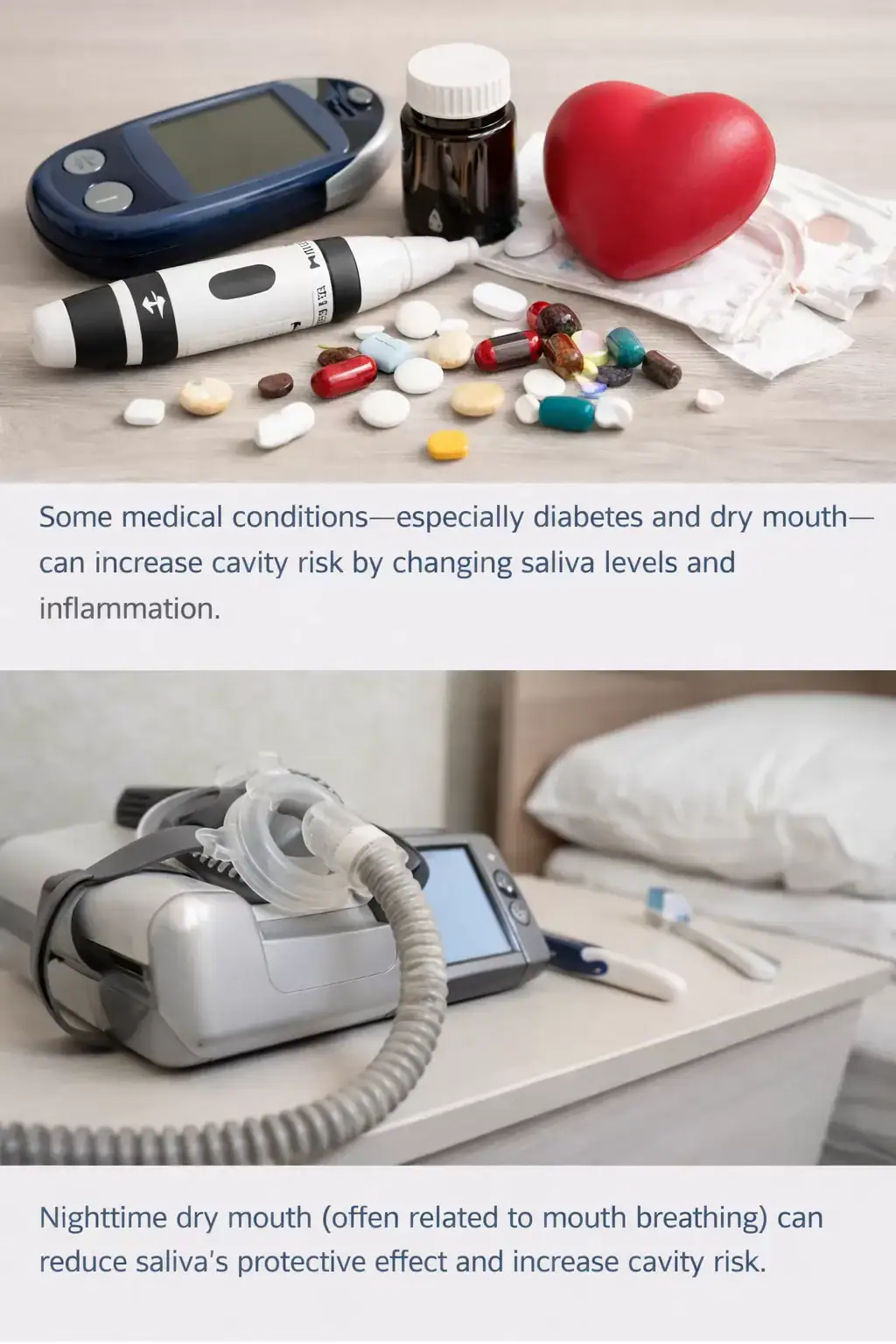
Dry mouth is one of the biggest cavity risk multipliers. When saliva is low, acids stay on the teeth longer and plaque builds up faster—especially around the gumline and between teeth.
- Common causes: medications (including many for blood pressure, allergies, depression/anxiety), dehydration, mouth breathing, and certain medical conditions.
- What it feels like: sticky/dry sensation, frequent thirst, bad breath, soreness, or trouble swallowing dry foods.
2) Diabetes
Diabetes can affect the mouth in a few ways, including changes in saliva, inflammation, and healing. Some patients also experience more dry mouth, which can accelerate decay risk.
- Why it matters: higher inflammation and a drier oral environment can make plaque harder to control.
- What helps: consistent home care, risk-based preventive visits, and addressing dry mouth symptoms.

3) Acid reflux (GERD)
GERD can expose teeth to stomach acids, which may weaken enamel and make teeth more vulnerable to decay and sensitivity. Even “silent reflux” can affect teeth over time.
- Clues: frequent heartburn, sour taste, chronic cough, or enamel wear your dentist notices.
- Prevention tip: talk with your physician about controlling reflux, and ask your dentist about enamel protection strategies.
4) Conditions that limit dexterity or energy
Anything that makes brushing and flossing harder can indirectly increase cavity risk. That includes arthritis, certain neurological conditions, chronic pain, or simply fatigue from ongoing health challenges.
- What helps: electric toothbrushes, floss aids, water flossers, and simplified routines that are easier to maintain.
5) Sleep-related breathing issues and mouth breathing
Many people who mouth-breathe at night wake up with a dry mouth. A drier mouth can mean more plaque, more acid exposure, and a higher chance of decay—especially if this happens night after night.
Medications that can raise cavity risk (often through dry mouth)
Many medications list “dry mouth” as a side effect. This doesn’t mean you should stop taking a prescribed medication—just that you may need a better prevention plan. Common categories include:
- Some blood pressure medications
- Many allergy medications and decongestants
- Certain antidepressants and anxiety medications
- Some pain medications
How to reduce your cavity risk if you have a medical condition
The best prevention plan is risk-based. If you’re higher risk, you may need a different strategy than “brush twice a day.” Here are the most effective steps:
1) Improve between-teeth cleaning
Many cavities start between teeth where brushing can’t reach. Floss daily (or use alternatives like interdental brushes/water flossers if flossing is difficult).
2) Reduce “frequency” of sugar exposure
It’s not just how much sugar you eat—it’s how often your teeth are exposed to it. Sipping sweet drinks or grazing all day keeps acid levels high.
3) Address dry mouth directly
- Hydrate throughout the day
- Ask your dentist about dry-mouth strategies
- Use a bedroom humidifier if nighttime dryness is an issue
4) Keep preventive visits consistent
Professional cleanings and exams catch problems early—often before you feel pain. Learn why this matters here:
Why regular dental exams and cleanings are important.
5) Watch for gum inflammation too
Gum irritation can make plaque control harder and increase overall oral health risk. Helpful reading:
Understanding periodontal disease vs. gingivitis.
Get a personalized cavity-prevention plan in Greenville, NC
If you have a medical condition and feel like you’re stuck in a cycle of cavities, it’s time for a risk-based strategy. Schedule with Pruitt & Earp Dentistry:
Contact us.
Medical disclaimer: This article is educational and not a diagnosis. Medical concerns should be discussed with your physician, and dental concerns should be evaluated by your dentist.